Machine
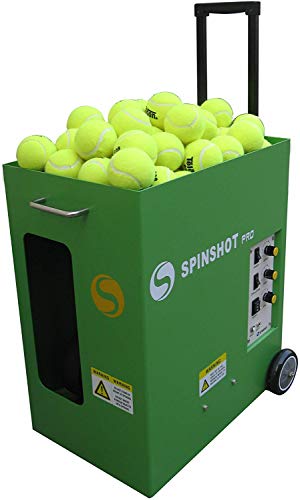
Spinshot Pro
Direct controls; adjustable topspin, backspin and electronic elevation.
Confirm the selected package, accessories and seller on Amazon.
Check Amazon offer ↗Read the model guideFeed interval is the time between successive launches. Ball speed describes how fast a ball travels. Changing one does not mean you have changed the other. A manageable machine session needs both a suitable incoming ball and enough time to prepare for the next one, particularly when you add movement or a demanding recovery target.
As an Amazon Associate I earn from qualifying purchases. About affiliate links.
Machine
Direct controls; adjustable topspin, backspin and electronic elevation.
Confirm the selected package, accessories and seller on Amazon.
Check Amazon offer ↗Read the model guide
Machine
Lower listed weight; topspin and backspin.
Confirm the selected package, accessories and seller on Amazon.
Check Amazon offer ↗Read the model guideWatch one whole repetition: preparation, movement, contact, follow-through and recovery. The next feed should arrive in a way that serves the drill's purpose. If the goal is a controlled technical repetition, a hurried recovery can turn it into a different task before you notice.
Use a simple fixed feed first and adjust timing while leaving placement, height and spin stable. That makes it easier to identify whether a rushed shot comes from the interval or the incoming ball. Once the rhythm is comfortable, introduce movement and reassess rather than preserving the same timing automatically.
Some controls show seconds; others show levels whose numerical direction is specific to the machine. Do not assume that turning a number up always creates a longer pause. Sports Tutor publishes Tennis Tutor's feed range as an interval between balls, while other control systems may use a relative setting.
Write the meaning beside the value in your practice notes. A note such as 'comfortable recovery, approximately five seconds between launches' is more interpretable than 'feed 5' when you switch machines or revisit the drill months later. A setting number without its model is not a portable prescription.
The same launch schedule feels different at the baseline and near the net. The ball has a different distance to travel, and the movement task may change. A feed that was convenient for stationary groundstrokes should be reassessed when you begin approach shots or volleys.
Keep all positioning and proximity within the machine's manual requirements. Set up a drill through permitted settings and placement, rather than moving closer to make a feed artificially harder. If the desired exercise falls outside the manufacturer's guidance, use another practice method.
As an Amazon Associate I earn from qualifying purchases. About affiliate links.
Machine
Direct controls; adjustable topspin, backspin and electronic elevation.
Confirm the selected package, accessories and seller on Amazon.
Check Amazon offer ↗Read the model guideMachine
Lower listed weight; topspin and backspin.
Confirm the selected package, accessories and seller on Amazon.
Check Amazon offer ↗Read the model guideFor planning, a four-second launch interval is 15 launches per minute; a six-second interval is 10. A 60-ball set would therefore occupy roughly four or six minutes of continuous feeding, excluding startup delays, pauses and irregular feeds. Those are arithmetic examples, not recommended training intensities.
This helps explain why hopper capacity does not equal session length. A large basket at a short interval can still be emptied quickly. Plan collection and rest around the drill, and reduce the loaded quantity when that better matches a short set.
Shortening the interval, widening movement and increasing ball pace together makes it difficult to discover why quality drops. Choose one adjustment, observe a short set and decide whether it served the goal. Return to the prior version if the new setting prevents you from completing the intended movement.
Write down a stopping rule such as ending the set when you repeatedly fail to regain the agreed recovery position. That is more useful than continuing solely because balls remain. The best interval is the one that supports today's task; it is not a permanent measure of your playing level.
As an Amazon Associate I earn from qualifying purchases. About affiliate links.
Machine
Direct controls; adjustable topspin, backspin and electronic elevation.
Confirm the selected package, accessories and seller on Amazon.
Check Amazon offer ↗Read the model guideMachine
Lower listed weight; topspin and backspin.
Confirm the selected package, accessories and seller on Amazon.
Check Amazon offer ↗Read the model guideFind a machine · Plan your complete setup · Tennis ball machine homepage