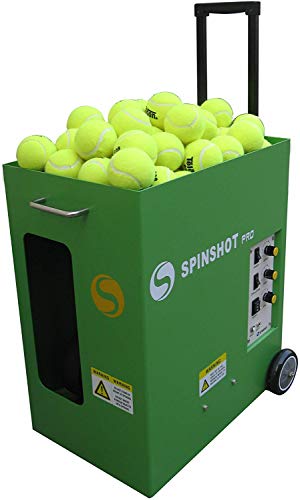
Machine
Spinshot Pro
Direct controls; adjustable topspin, backspin and electronic elevation.
Confirm the selected package, accessories and seller on Amazon.
Check Amazon offer ↗Read the model guideA useful machine session begins with one purpose and ends with evidence about that purpose. You do not need a complicated drill library. Choose a manageable incoming ball, define what a successful repetition looks like, and leave time to check the result. The following is an adaptable planning framework, not a prescribed workout intensity.
As an Amazon Associate I earn from qualifying purchases. About affiliate links.
Machine
Direct controls; adjustable topspin, backspin and electronic elevation.
Confirm the selected package, accessories and seller on Amazon.
Check Amazon offer ↗Read the model guide
Machine
Lower listed weight; topspin and backspin.
Confirm the selected package, accessories and seller on Amazon.
Check Amazon offer ↗Read the model guideAsk something you can observe: can you send a comfortable forehand feed into a broad crosscourt target while finishing balanced? Or can you recover to a chosen position before the next launch? Select a task that matches your current ability and any guidance from your coach.
Write the success measure before starting. 'Improve forehands' is too broad to evaluate after a basket. 'Record target hits in a small set while keeping the same feed' gives you useful information. Keep technical cues few enough that you can remember them during the repetition.
Divide the booking into equipment setup, an appropriate warm-up, focused practice blocks, collection and packing. Do not assign the entire reservation to active hitting. OnCourt OffCourt's ball-machine guidance favors limited sequences and pauses, which supports planning deliberate breaks rather than treating an empty hopper as the only stopping point.
Set up and operate the machine within its manual's requirements. Begin with a familiar basic feed to check placement and ball behavior before trying the main drill. This opening check keeps calibration separate from the result you intend to measure.
Use a small repeatable set at a comfortable difficulty and record the outcome. Choose the set size for your situation rather than filling the hopper automatically. Note both the result and whether you completed the intended movement or technical cue.
Repeat the same task after a break before changing the machine. A single good or poor run can be misleading. If you are already struggling to complete the chosen action, simplify the incoming ball or task. Do not add a new challenge merely because the session plan originally included it.
As an Amazon Associate I earn from qualifying purchases. About affiliate links.
Machine
Direct controls; adjustable topspin, backspin and electronic elevation.
Confirm the selected package, accessories and seller on Amazon.
Check Amazon offer ↗Read the model guideMachine
Lower listed weight; topspin and backspin.
Confirm the selected package, accessories and seller on Amazon.
Check Amazon offer ↗Read the model guideAdjust one feature that relates to the goal: a narrower target, slightly more movement, or a different incoming height. Keep the other conditions as stable as practical. Then observe whether you can preserve the original quality while handling that change.
Record the adjustment plainly. A note such as 'same feed, smaller target' is easier to interpret than a screenshot alone. If performance collapses, return to the earlier version and identify what became difficult. This gives the session a decision process instead of a sequence of unrelated settings.
Return to the initial task for a short closing block if it is appropriate to continue. Compare the result with the reference block while noting fatigue, ball changes or other differences. Do not treat one session as proof of lasting improvement; use it to choose the next useful practice question.
Save the drill's purpose, machine setup, ball batch and one observation. If possible, later test the same target or movement in a rally or points with a partner. That adds context about whether a skill rehearsed under controlled feeding is available in a less predictable tennis situation.
As an Amazon Associate I earn from qualifying purchases. About affiliate links.
Machine
Direct controls; adjustable topspin, backspin and electronic elevation.
Confirm the selected package, accessories and seller on Amazon.
Check Amazon offer ↗Read the model guideMachine
Lower listed weight; topspin and backspin.
Confirm the selected package, accessories and seller on Amazon.
Check Amazon offer ↗Read the model guideFind a machine · Plan your complete setup · Tennis ball machine homepage