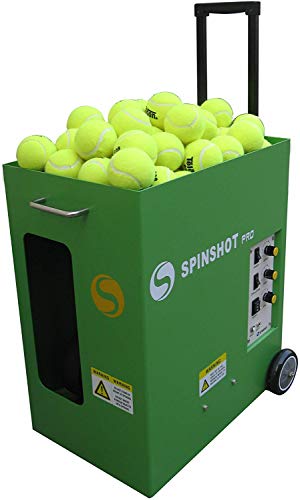
Machine
Spinshot Pro
Direct controls; adjustable topspin, backspin and electronic elevation.
Confirm the selected package, accessories and seller on Amazon.
Check Amazon offer ↗Read the model guideA ball-machine speed setting is only one part of the feed you receive. Spin, elevation, machine position and the balls themselves also affect the trajectory and bounce. Approach setup as a small experiment: decide the incoming ball you want, change one variable, and observe the result before moving to the next control.
As an Amazon Associate I earn from qualifying purchases. About affiliate links.
Machine
Direct controls; adjustable topspin, backspin and electronic elevation.
Confirm the selected package, accessories and seller on Amazon.
Check Amazon offer ↗Read the model guide
Machine
Lower listed weight; topspin and backspin.
Confirm the selected package, accessories and seller on Amazon.
Check Amazon offer ↗Read the model guideStart with an outcome such as a comfortable baseline feed landing in a broad central area, or a higher ball that allows an overhead within the machine's permitted setup. That description gives you something to check on court. A copied speed value may not.
Record the starting machine location and ball batch. Without that context, identical control settings can be difficult to reproduce meaningfully. Treat a manufacturer's maximum speed as a capability claim, not a guarantee that your selected spin and elevation will produce that same speed in your intended drill.
Choose the simplest permitted fixed-feed mode, with a manageable interval and a conservative ball configuration. Observe several launches from an appropriate safe position before you begin hitting. Adjust until the landing zone is useful and the ball is comfortable to receive.
Do not tune a complicated random program first. Variable direction and depth conceal whether an adjustment did what you intended. A stable reference feed gives you a place to return when a new drill becomes confusing or when you change your practice balls.
Topspin and backspin influence flight and bounce, so changing spin can require another look at elevation or pace. The Spinshot maintenance guidance specifically notes that high topspin or backspin settings can reduce delivery speed on its machines. Do not assume another brand uses an identical control relationship.
If your machine has a numeric spin scale, treat its levels as model-specific unless the manufacturer provides a defined physical measurement. A level of five on one controller is not evidence of the same incoming ball as five on another. Compare the actual drill outcome instead of the matching numerals.
As an Amazon Associate I earn from qualifying purchases. About affiliate links.
Machine
Direct controls; adjustable topspin, backspin and electronic elevation.
Confirm the selected package, accessories and seller on Amazon.
Check Amazon offer ↗Read the model guideMachine
Lower listed weight; topspin and backspin.
Confirm the selected package, accessories and seller on Amazon.
Check Amazon offer ↗Read the model guideA ball landing deeper may feel more demanding even when the displayed speed has not changed. A higher feed may give more time but require a different contact point. A lower trajectory can change net clearance. These are reasons to describe what changed, rather than declaring every difficult feed faster.
Use a broad landing target when calibrating. After the incoming ball is stable, tighten the target or add a movement requirement if those changes serve your practice. Avoid correcting a difficult drill by adjusting several settings simultaneously; you may solve one problem while creating another.
Save the model, ball batch, machine position, mode, interval and the settings that produced the intended feed. Add a plain-language note about the resulting ball. A screenshot can preserve controls, but the description preserves the purpose.
When a familiar drill behaves differently, first check the conditions you recorded. If the same compatible balls and setup still produce a persistent problem, consult the model's troubleshooting instructions. A controlled record is useful both for your practice and for support; it is more informative than reporting that the machine feels slow.
As an Amazon Associate I earn from qualifying purchases. About affiliate links.
Machine
Direct controls; adjustable topspin, backspin and electronic elevation.
Confirm the selected package, accessories and seller on Amazon.
Check Amazon offer ↗Read the model guideMachine
Lower listed weight; topspin and backspin.
Confirm the selected package, accessories and seller on Amazon.
Check Amazon offer ↗Read the model guideFind a machine · Plan your complete setup · Tennis ball machine homepage