Machine
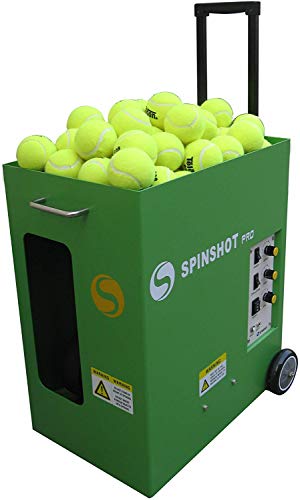
Spinshot Pro
Direct controls; adjustable topspin, backspin and electronic elevation.
Confirm the selected package, accessories and seller on Amazon.
Check Amazon offer ↗Read the model guideCleaning guidance must match the machine. Throwing wheels, feeder mechanisms, cases and electrical components do not all call for the same treatment. A useful routine starts with the manufacturer's approved procedure and a record of what you observe, rather than collecting several brands' instructions into one improvised maintenance method.
As an Amazon Associate I earn from qualifying purchases. About affiliate links.
Machine
Direct controls; adjustable topspin, backspin and electronic elevation.
Confirm the selected package, accessories and seller on Amazon.
Check Amazon offer ↗Read the model guide
Machine
Lower listed weight; topspin and backspin.
Confirm the selected package, accessories and seller on Amazon.
Check Amazon offer ↗Read the model guideIdentify the exact model and, where relevant, generation. Read its cleaning and maintenance section along with the shutdown instructions before preparing materials. If a support page and your manual appear to disagree, ask the manufacturer which procedure applies to your unit.
Separate ordinary exterior care from internal cleaning and wheel service. Instructions for one surface are not permission to use the same product throughout the machine. Likewise, a material or tool recommended by one brand should not be transferred to a different wheel design without confirmation.
Inspect the practice batch during collection so unwanted debris does not quietly return with every load. Keep questionable balls apart from the ready-to-use batch. This gives you an opportunity to spot a worn or contaminated ball before it becomes a repeated variable in your next drill.
Spinshot's maintenance page specifically discusses dirt and sand around its feeder, recommends vacuum cleaning, and discourages compressed air. Those are manufacturer instructions for its equipment. Check your own documentation before selecting a cleaning method, especially if you play on a surface that leaves substantial material on the balls.
Record whether the issue is visible debris, reduced throw consistency, a feed interruption or a new sound. Note when it started and whether you changed balls, court surface or settings. These details help you identify the relevant manual section and explain the problem to support.
Do not label every short or uneven feed a dirty-wheel problem. A different ball batch, power issue or configuration change may produce a similar observation. A controlled comparison using the manufacturer's permitted setup can provide better evidence than immediately performing the most invasive cleaning procedure you have found.
As an Amazon Associate I earn from qualifying purchases. About affiliate links.
Machine
Direct controls; adjustable topspin, backspin and electronic elevation.
Confirm the selected package, accessories and seller on Amazon.
Check Amazon offer ↗Read the model guideMachine
Lower listed weight; topspin and backspin.
Confirm the selected package, accessories and seller on Amazon.
Check Amazon offer ↗Read the model guideSome manuals prescribe a particular treatment for throwing wheels. Follow only the applicable instructions, including any power-isolation, access and material requirements. Avoid adding solvents, abrasives or lubrication because another owner described a successful repair on a different product.
If you cannot carry out a procedure with the access and tools the manufacturer requires, ask for service guidance. The aim is to preserve reliable operation, not to perform every maintenance task yourself. A clear description and photographs taken without unsafe access may be more useful than an uncertain repair attempt.
Write the date, procedure followed and any consumables or parts used. On the next permitted operating check, use a familiar ball batch and basic feed so that you can judge whether the original symptom changed. Keep unresolved behavior in the record instead of assuming cleaning fixed it.
For a shared machine, make the record easy to find and define who can authorize service. Multiple owners trying different treatments can obscure what has already happened. One consistent routine and a clear support history are more useful than frequent undocumented adjustments, especially when the machine eventually needs professional attention.
As an Amazon Associate I earn from qualifying purchases. About affiliate links.
Machine
Direct controls; adjustable topspin, backspin and electronic elevation.
Confirm the selected package, accessories and seller on Amazon.
Check Amazon offer ↗Read the model guideMachine
Lower listed weight; topspin and backspin.
Confirm the selected package, accessories and seller on Amazon.
Check Amazon offer ↗Read the model guideFind a machine · Plan your complete setup · Tennis ball machine homepage