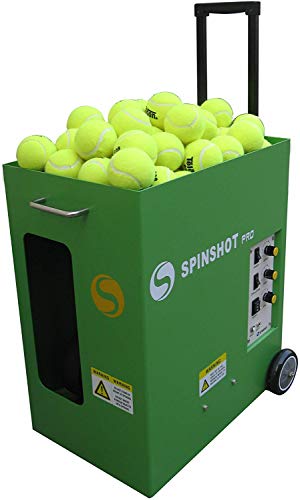
Machine
Spinshot Pro
Direct controls; adjustable topspin, backspin and electronic elevation.
Confirm the selected package, accessories and seller on Amazon.
Check Amazon offer ↗Read the model guideStorage is part of ownership, not an afterthought once the machine arrives. A suitable location must accommodate the machine, compatible balls and accessories while allowing the care routine in the manual. It should also be accessible enough that getting ready for a session does not become a project of its own.
As an Amazon Associate I earn from qualifying purchases. About affiliate links.
Machine
Direct controls; adjustable topspin, backspin and electronic elevation.
Confirm the selected package, accessories and seller on Amazon.
Check Amazon offer ↗Read the model guide
Machine
Lower listed weight; topspin and backspin.
Confirm the selected package, accessories and seller on Amazon.
Check Amazon offer ↗Read the model guideMeasure the machine in its storage configuration and leave room to handle it without forcing it past other equipment. Check whether the hopper folds, reverses or removes, and use the documented arrangement. Consider access to any approved charging setup as a separate requirement.
A location that fits the machine but creates an awkward lift every time can reduce its usefulness. If the storage area is downstairs or outside the usual route to your vehicle, account for that trip in your portability decision. Convenient storage can matter as much as easy rolling on court.
Use the exact model's instructions for acceptable storage conditions. The Spinshot Player manual specifies a clean, dry location and warns against vehicle storage and outdoor cold or wet conditions. Apply that guidance to the documented model and look up the corresponding requirements for another machine.
Do not assume that a cover makes an unsuitable space appropriate. A cover may have a defined dust or transport role without making the machine weatherproof. Ask the manufacturer about a garage, shed or other proposed location when its conditions fall outside what the documentation clearly addresses.
After the session, follow the prescribed shutdown and transport procedure, account for balls and accessories, and inspect for anything that needs attention before the next visit. Keep ready-to-use balls separate from items awaiting cleaning, drying or replacement.
Store the controller, keys or other essential small parts in a consistent place. A machine can be mechanically ready but unusable because a required remote is missing. Keep charging equipment identifiable so that a similar-looking cable from another device does not become the default through convenience.
As an Amazon Associate I earn from qualifying purchases. About affiliate links.
Machine
Direct controls; adjustable topspin, backspin and electronic elevation.
Confirm the selected package, accessories and seller on Amazon.
Check Amazon offer ↗Read the model guideMachine
Lower listed weight; topspin and backspin.
Confirm the selected package, accessories and seller on Amazon.
Check Amazon offer ↗Read the model guideFind the instructions for the installed battery and charger, including long-term storage. Do not borrow a schedule from a different machine or assume that every smart charger should remain connected. Battery type, charger design and product revision can change what the manufacturer instructs.
If the documentation is unclear, send support the model and charger details and ask for the storage procedure in writing. Keep that response with the manual. Set a reminder only for the maintenance interval that applies to your setup, rather than adopting an internet rule expressed as a universal number of days.
Keep a simple readiness note if the machine will sit unused: last session date, any unresolved issue and the applicable charging status. Before returning to use, review the manual's startup requirements and inspect the stored setup rather than assuming everything is ready because the exterior looks unchanged.
For shared machines, assign someone to report faults and maintain the storage routine. Ownership by a group can otherwise mean that everyone assumes another person checked the battery or returned the controller. A visible, short record makes the responsibility concrete without requiring an elaborate maintenance system.
As an Amazon Associate I earn from qualifying purchases. About affiliate links.
Machine
Direct controls; adjustable topspin, backspin and electronic elevation.
Confirm the selected package, accessories and seller on Amazon.
Check Amazon offer ↗Read the model guideMachine
Lower listed weight; topspin and backspin.
Confirm the selected package, accessories and seller on Amazon.
Check Amazon offer ↗Read the model guideFind a machine · Plan your complete setup · Tennis ball machine homepage