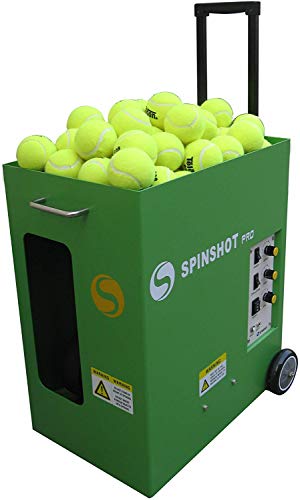
Machine
Spinshot Pro
Direct controls; adjustable topspin, backspin and electronic elevation.
Confirm the selected package, accessories and seller on Amazon.
Check Amazon offer ↗Read the model guideA compact toss feeder and a full-court ball machine may both deliver tennis balls automatically, but they can create very different practice situations. The useful comparison is the incoming ball each can supply in an approved setup. Start with your drill and available space before deciding that a smaller device is simply a cheaper version of a larger machine.
As an Amazon Associate I earn from qualifying purchases. About affiliate links.
Machine
Direct controls; adjustable topspin, backspin and electronic elevation.
Confirm the selected package, accessories and seller on Amazon.
Check Amazon offer ↗Read the model guide
Machine
Simple short-toss repetition; lightweight.
Confirm the selected package, accessories and seller on Amazon.
Check Amazon offer ↗Read the model guide
Machine
Compact dimensions; simple repetition.
Confirm the selected package, accessories and seller on Amazon.
Check Amazon offer ↗Read the model guideA short toss can support a narrow task such as preparing and contacting a repeatable incoming ball. A court-based machine may offer the pace, elevation and movement patterns needed to receive balls across a net. Ask for a demonstration of your intended exercise rather than relying on the generic term ball machine.
Sports Tutor describes Tennis Twist as a compact feeder that launches a ball every five seconds and holds up to 28 balls. Its page characterizes the delivery as an adjustable short toss. Those features define a particular practice role; they do not imply the same capability as a faster full-court launcher.
Check whether feed timing, direction, elevation and pace are adjustable, fixed or absent. A steady interval can work well for a simple contact task. It may be less useful if your exercise needs a longer recovery pause, two receiving locations or consecutive shots with different trajectories.
Keep those distinctions visible when comparing products. An easy-to-carry feeder can be the better fit for its intended task without being a replacement for advanced court practice. Equally, buying a large machine does not add value when all you need is the same modest short feed.
The device's dimensions describe storage, not the entire operating area. You also need space for the permitted ball path, your swing and movement, and the shot you hit. Consider where missed balls can go and whether the setting is appropriate under the product's instructions.
Do not take a manufacturer photograph in a driveway or basement as approval for your particular space. Ask about your intended location when the manual does not settle the question. A low setting on a full-court machine does not automatically make it suitable for indoor home practice.
As an Amazon Associate I earn from qualifying purchases. About affiliate links.
Machine
Direct controls; adjustable topspin, backspin and electronic elevation.
Confirm the selected package, accessories and seller on Amazon.
Check Amazon offer ↗Read the model guideMachine
Simple short-toss repetition; lightweight.
Confirm the selected package, accessories and seller on Amazon.
Check Amazon offer ↗Read the model guideMachine
Compact dimensions; simple repetition.
Confirm the selected package, accessories and seller on Amazon.
Check Amazon offer ↗Read the model guideConfirm which ball types the exact feeder permits. If you intend to hit into a net or rebounder, check that accessory's specified use and the space its setup requires. A net that contains some of your shots does not change the launcher's own operating restrictions.
Plan how you will recover balls between sets. The convenience of a compact machine can disappear if every repetition sends balls into an awkward collection area. Consider a simple manual toss practice alternative when the available space cannot support the automatic setup you are considering.
Write one sentence describing the drill the purchase must enable, including where you will use it. Then list the capabilities required to deliver that drill. Use the machine finder and model comparison tool to organize candidates, verifying each one's documented role.
Choose a compact feeder when its short-feed task and permitted setup match your needs. Choose a court machine when the exercise depends on capabilities the feeder lacks and you have appropriate court access. If the available space is the unresolved issue, settle that before buying either category.
As an Amazon Associate I earn from qualifying purchases. About affiliate links.
Machine
Direct controls; adjustable topspin, backspin and electronic elevation.
Confirm the selected package, accessories and seller on Amazon.
Check Amazon offer ↗Read the model guideMachine
Simple short-toss repetition; lightweight.
Confirm the selected package, accessories and seller on Amazon.
Check Amazon offer ↗Read the model guideMachine
Compact dimensions; simple repetition.
Confirm the selected package, accessories and seller on Amazon.
Check Amazon offer ↗Read the model guideFind a machine · Plan your complete setup · Tennis ball machine homepage