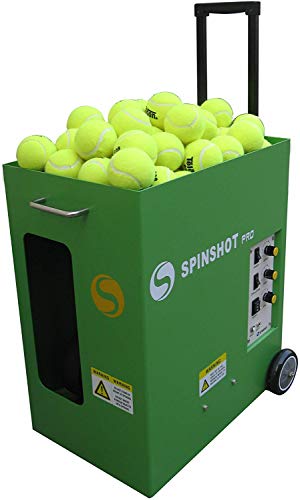
Machine
Spinshot Pro
Direct controls; adjustable topspin, backspin and electronic elevation.
Confirm the selected package, accessories and seller on Amazon.
Check Amazon offer ↗Read the model guideThese practice options solve different problems. A machine supplies a configured incoming ball; a wall returns your previous shot; a partner adds another player's actions; a coach can observe and guide the learning process. Compare the work each can do for your next session instead of ranking them by the number of balls you might hit.
As an Amazon Associate I earn from qualifying purchases. About affiliate links.
Machine
Direct controls; adjustable topspin, backspin and electronic elevation.
Confirm the selected package, accessories and seller on Amazon.
Check Amazon offer ↗Read the model guide
Machine
Lower listed weight; topspin and backspin.
Confirm the selected package, accessories and seller on Amazon.
Check Amazon offer ↗Read the model guideChoose a machine when you want to repeat a defined feed while aiming across a net or working on a particular movement. The independence from your previous shot is useful: a missed forehand does not have to alter the next incoming ball. You can repeat the situation and observe one change in your response.
That control is also a limitation. A fixed launch does not supply an opponent's preparation or response to your shot. Variable programs can add uncertainty, but check which variables actually change. A label such as match mode does not make every element of a live rally present.
A wall links the next ball to what you just hit. This can make maintaining a manageable rally a useful task in itself. You can choose an attainable contact rhythm or a visible wall target, provided the venue permits that activity and the space is suitable.
The wall does not show where your ball would have landed on the far side of a tennis court. Keep that distinction in your scoring. Reaching a wall target and landing a deep crosscourt shot are different outcomes, so avoid interpreting a long wall rally as proof that a particular match shot is reliable.
With a partner, your shot influences what happens next. You receive visual information from their movement and contact, then must respond to the resulting ball. Cooperative rallying can emphasize repetition; conditioned points can introduce a specific choice while retaining a live exchange.
Agree on the task before starting. A partner who wants competitive points may not enjoy supplying repeated comfortable backhands, and a cooperative rally may not address your need to recognize a short ball. Clear expectations matter more than simply finding someone of roughly the same playing level.
As an Amazon Associate I earn from qualifying purchases. About affiliate links.
Machine
Direct controls; adjustable topspin, backspin and electronic elevation.
Confirm the selected package, accessories and seller on Amazon.
Check Amazon offer ↗Read the model guideMachine
Lower listed weight; topspin and backspin.
Confirm the selected package, accessories and seller on Amazon.
Check Amazon offer ↗Read the model guideA qualified coach can help identify what to change, choose a suitable task and check your interpretation of feedback. That is different from supplying a high volume of balls. If you are uncertain why a stroke breaks down, more solo repetitions may leave the uncertainty intact.
Ask a prospective coach how they would structure work between lessons and what you should measure. The USTA provides a coach-search resource, but finding a listing is only a starting point for discussing fit. Your goals, communication preferences and practical schedule still need to be considered.
For a recurring backhand problem, coaching might identify a useful cue, a machine might supply controlled repetitions, and a partner might test the shot in a rally. A wall could add convenient solo practice when its rebound task fits the same purpose. You do not need every format in every week.
Judge the plan by whether each session answers a useful question. Keep one observation from each format and use it to choose the next task. This makes a machine purchase part of an intentional practice routine instead of assuming equipment can replace every other source of tennis learning.
As an Amazon Associate I earn from qualifying purchases. About affiliate links.
Machine
Direct controls; adjustable topspin, backspin and electronic elevation.
Confirm the selected package, accessories and seller on Amazon.
Check Amazon offer ↗Read the model guideMachine
Lower listed weight; topspin and backspin.
Confirm the selected package, accessories and seller on Amazon.
Check Amazon offer ↗Read the model guideFind a machine · Plan your complete setup · Tennis ball machine homepage