
Machine
TENNIIX Basic — black
Compact machine with programmable training.
Confirm the selected package, accessories and seller on Amazon.
Check Amazon offer ↗Read the model guideThe AI label can cover several different capabilities: selecting a preset, generating a drill, tracking a player, or changing a feed in response to movement. Before paying for it, name the behavior you want the machine to change and what information it would need to make that change. Then ask for a demonstration of that specific behavior.
As an Amazon Associate I earn from qualifying purchases. About affiliate links.
Machine
Compact machine with programmable training.
Confirm the selected package, accessories and seller on Amazon.
Check Amazon offer ↗Read the model guide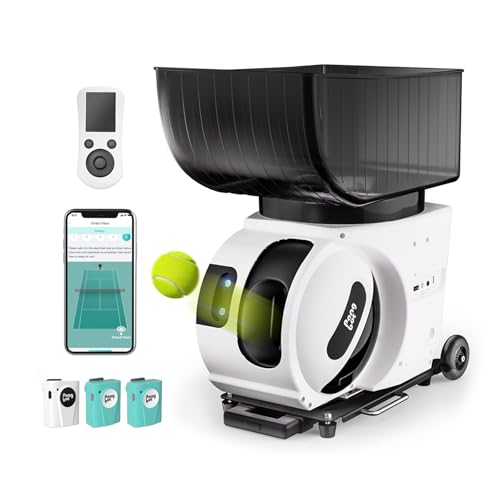
Machine
Position-aware training hardware included; broad drill library.
Confirm the selected package, accessories and seller on Amazon.
Check Amazon offer ↗Read the model guide
Machine
Vision features added in compact body.
Confirm the selected package, accessories and seller on Amazon.
Check Amazon offer ↗Read the model guideA programmed sequence can alternate positions, speed or spin without sensing what you do. Adaptive feeding implies that something about the player or play changes the next action. Neither approach is inherently right for every session; they address different needs.
PONGBOT describes a recovery trigger for the Pace S Pro that senses a player's return to position before the next feed. That is a specific manufacturer claim to investigate. Ask what equipment enables it, what position counts as recovery, and how the behavior changes when the player moves somewhere unexpected.
Movement tracking does not necessarily mean ball tracking, stroke analysis or accurate evaluation of your technique. A system that knows where you stand may still have no information about whether your last shot landed in the target. Ask the seller to separate measured data from inferred feedback and prewritten drill descriptions.
Define the feedback you need. If the goal is to pause until you recover, position sensing may address it. If the goal is to identify why your backhand misses long, request evidence that the product measures the relevant action rather than assuming a coaching claim includes that capability.
Find out which sensors, wearables, stands or phone functions are required and whether they come with the selected package. Ask how long a normal calibration takes, how the system handles a moved component, and whether your intended court layout creates any restrictions.
During a demonstration, include an ordinary interruption: stop, collect balls and restart a familiar drill. Observe how easily you return to practice. A feature that works well after a careful setup may still be inconvenient when your court time is short or different people share the machine.
As an Amazon Associate I earn from qualifying purchases. About affiliate links.
Machine
Compact machine with programmable training.
Confirm the selected package, accessories and seller on Amazon.
Check Amazon offer ↗Read the model guideMachine
Position-aware training hardware included; broad drill library.
Confirm the selected package, accessories and seller on Amazon.
Check Amazon offer ↗Read the model guideMachine
Vision features added in compact body.
Confirm the selected package, accessories and seller on Amazon.
Check Amazon offer ↗Read the model guideAsk which functions work without an account, internet connection, subscription or current phone model. Verify those answers for the exact machine and app version. Also ask what happens when a tracking accessory is unavailable or its battery is depleted.
Look for a useful conventional feeding mode alongside the advanced features. You may sometimes want steady repetitions with no adaptation at all. Confirm how saved drills are retained and whether another user can change them, especially if several family members or club players share the equipment.
Choose a test that reflects your reason for buying. If you want more appropriate recovery time, compare how often a feed arrives before you are ready. If you want variable patterns, compare whether the machine supplies the shot combinations you intended. Do not use a large preset count as a substitute for that test.
Treat claims about improvement as separate from claims about equipment function. A machine may track movement successfully without guaranteeing a better match result. Buy the capability you can verify, with a support and update arrangement you understand, and plan how it will fit into your wider practice.
As an Amazon Associate I earn from qualifying purchases. About affiliate links.
Machine
Compact machine with programmable training.
Confirm the selected package, accessories and seller on Amazon.
Check Amazon offer ↗Read the model guideMachine
Position-aware training hardware included; broad drill library.
Confirm the selected package, accessories and seller on Amazon.
Check Amazon offer ↗Read the model guideMachine
Vision features added in compact body.
Confirm the selected package, accessories and seller on Amazon.
Check Amazon offer ↗Read the model guideFind a machine · Plan your complete setup · Tennis ball machine homepage